
Occasionally, there are days where I just wake up and the first words that come out of my mouth as I stare at the ceiling are “god dammit”.
What I look like when I can’t fall asleep due to the memories
involved with beating the Water Temple from Ocarina of Time
The good news my friends: today is not one of those days. In a rare moment of committing to what we in the industry like to refer to as “a good fucking idea”, Konami stealth released the Castlevania: Dominus collection on August 27th, without any fanfare leading up to the titles launch day whatsoever. While this move has backfired in spectacular fashion in the gaming world in the past (See: The Sega Saturn launch), this circumstances surrounding the surprise release was met with nothing short of jubilation from both the gaming public and press alike, as we have been collectively waiting for the re-release of the DS trilogy of games for a long time.
The face of Castlevania fans the world
over when they heard the DS titles were
finally getting re-released
The reason Konami may have waited so long to let loose this collection of classic games is anyone’s guess, but I have a sneaking suspicion if you correlated the data of Konami’s success in the pachinko machine arena vs video game release schedule, you would see a not too surprising financial story of weary and woe, as Konami mostly gave up the ghost of having any value as a game company a long time ago. With the quality of the Dominus collection standing as the last time the Castlevania series was topical and relevant, see: 16 years ago, Castlevania may have represented the canary in the coalmine that not all was well in the land of Konami, as even outstanding titles like Dawn of Sorrow, Portrait of Ruin, and Order of Ecclesia weren’t even considered good enough to prevent the series from falling out of relevancy.
It would be like if the LOTR series fell into obscurity after the
movies released
I am only very slightly exaggerating in reference to the slow decline of the Konami gaming empire (in the West, at least) with that short synopsis, as the mix of their successful foray into the world of pachinko machines, combined with their complete lack of commitment in retaining talent circa 2010, while failing to maintain their big name gaming series is the stuff of nightmarish legend at this point. I will apologize after the fact at the complete lack of citation involving the history behind the collapse, as I don’t have much time right now so can’t be arsed to cobble together a hyperlinked timeline for you. One of the only reasons we likely even got the Dominus collection in our greasy little gaming hands was probably due in part to Nintendo and Netflix doing all of the heavy lifting and reminding people that Castlevania is still really fucking cool.
A Konami exec’s face while watching the Castlevania
anime on Netflix and thinking it would be an ideal
property to adapt to a video game series
I also wouldn’t be surprised if the Castlevania’s former series creative lead Koji Igarashi’s massive success with his kickstarted game Bloodstained, amongst the cornicopia of titles populating the metroidvania genre he helped to spawn, also helped to keep alive the spirit of the series he had to abandon, but I digress. This write up wasn’t suppose to be pissing on the memory of the failed and the fallen, but the first of a multipart retrospective involving the games in the Dominus collection. I chose to arbitrarily start with Portrait of Ruin, mostly due to the fact that I’ve played Dawn of Sorrow the most, and Order of Ecclesia is quite similar to what Bloodstained ended up being, so I feel as if I’ve spent the most time away from Portrait of Ruin, so let’s shoot the shit a little about what Portrait of Ruin has to offer.
Picture: slightly related
One of the more bizarre moments of interest with Portrait of Ruin was that based on how it was received overall upon release vs the other two DS titles that launched on the system, was that Portrait was more or less considered the lesser of the three. Don’t get me wrong, the game reviewed well and was placed on lists of acclaim left and right after launch, I think it’s more a telling dictation of just how strong the pedigree was for the DS titles across the board, with Dawn of Sorrow and Order of Ecclesia only making Portrait of Ruin pale in comparison to the level of quality they were bringing to the table.
Is Portrait of Ruin the Temple of Doom of the
Dominus Collection?
Building off of that point, I think that when you look at Dawn of Sorrow, the only detractions from people you ever really hear about the sequel are 1: the touch controls, and 2: the art direction. I think most people agree that while the DS certainly had it’s moments of innovation with utilizing the systems touch screens in a lot of amazing ways, the stuff they did with Dawn of Sorrow was needlessly tacked on bullshit to fill some ridiculous quota of showing off the systems capabilities. Whenever you change formula drastically enough to fundamentally upset the status quo enough that gamers start to turn against you as a result, you know yah dun goofed, which is essentially what happened with the touch screen based seal mechanic in Dawn of Sorrow.
They really sealed their fates with this
goofy gimmicky inclusion
The only other point of division for gamers with Dawn would be the people who lamented the lack of art done by infamous Castlevania illumni Ayami Kojima, who had helped to create some stellar art work for the series going all the way back to Symphony of the Night.
Dat Alucard, tho…
And as someone who pisses all over the idea of how derivative and bottom of the barrel crutching on basic anime stylization for one’s aesthetic can end up being, IGA’s decision to go that route to attract a younger demographic for the series based on the DS’ average age demographic was on point, as was thusly cemented way down the road after the fact.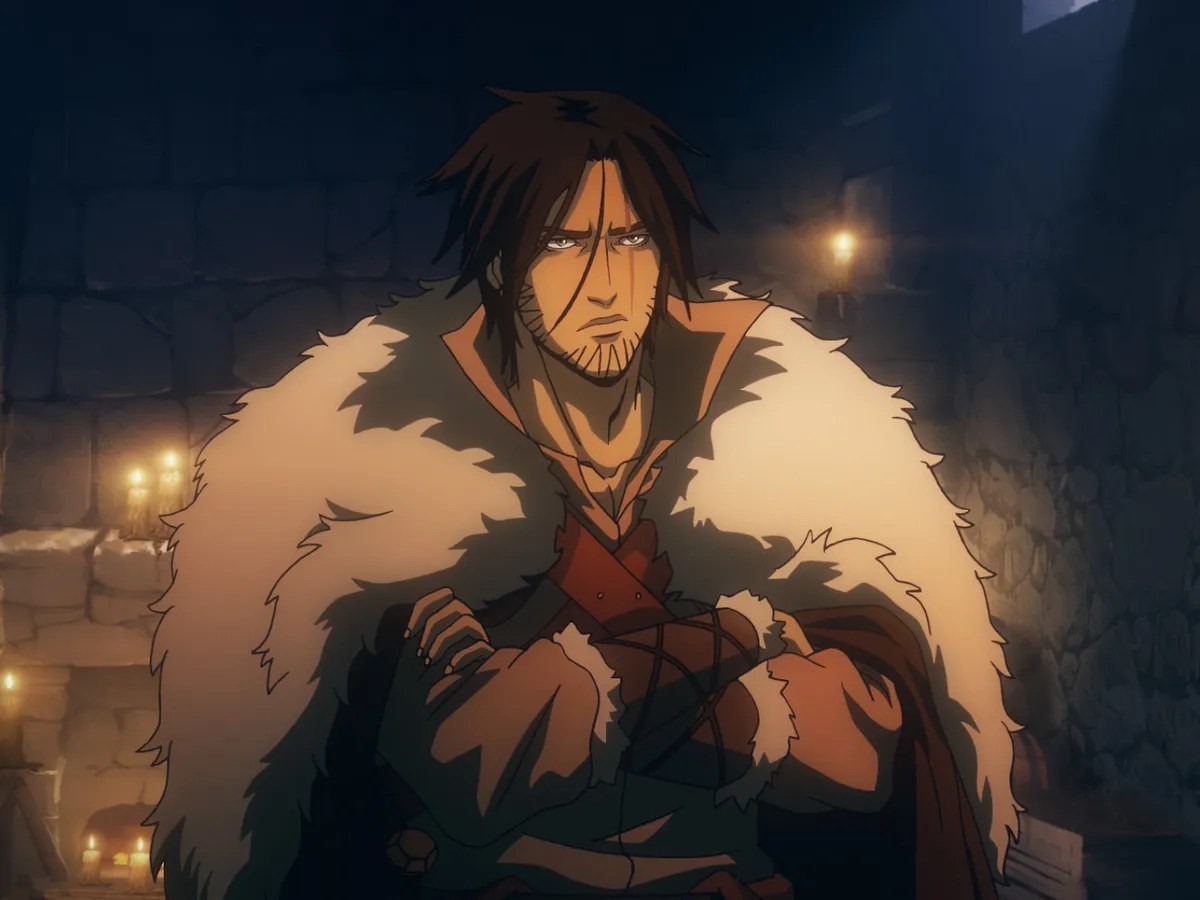
Pictured: Trevor Belmont grumpy he looks so fashionable
within an anime format
I guess to summarize my last few thoughts in a more succinct manner; with even the small points of contention involved with Dawn of Sorrow as a follow up to Aria, involves the game still being a follow up to Aria, which was just so damn good, it didn’t matter if the title took the low road with anime aesthetic or some clunky touch screen gimmicks: Aria was essentially nearly flawless as a spiritual follow up to Symphony of the Night, and likely the Castlevania game people had been waiting on impatiently for six years to finally get to play. No offense to the earlier GBA titles, and my condolences to the N64 “games” (it was really like one game and then a re-release with extra content), but Dawn of Sorrow was the sequel to the phantom that had haunted the series since gamers had finally and excitedly worked their way through the inverted castle.
For people who don’t know, the inverted castle was infamous
in that in order to beat it, you had to turn your tv upside down
in order to play it correctly (holds back laughter)
Which is why I ultimately think Portrait of Ruin wasn’t seen as the next grand ascension for the series, as gamers had already been recently treated to a double helping of what were arguably near ideal follow ups to Symphony in the form of the Sorrow duology. Not surprisingly, Ecclesia would go to course correct following Portrait, again, not because the title was considered bad by any metric, but because IGA and his team realized the way forward with the series after having been inspired by their own ideas in incorporating the portraits the way they did, to create a feeling of a more robust, expansive world Castlevania largely hadn’t seen up to that point, with the series usually being lock step with the equivalent of a bottle episode setting in video game format.
Hell of a piece of real estate
Whew, fun run down on some aspects involving my retrospective on the DS titles thus far, even though I ironically failed to discuss Portrait of Ruin at any great length. Something to look forward to for part two, I suppose. Stay tuned.
~Pashford
Tag Archives: Retro
The Belmont’s Day Off: Long Weekend Edition
Filed under Active Time Event
After The Money’s Gone
Once in a lifetime, water flowing underground…
Same as it ever was
I had about one bi…*trillion ideas I wanted to write about today, so of course I spent most of it absolutely not executing on a single god damn one. Certainly ideal for a day off, me thinks. In the future, look forward to a couple of article concepts I’ve concocted, involving at least some rambling about the recent Nintendo indie info dump, including some more thoughts on Cadence of Hyrule, which I’m totally vibing with, a fun little speedrun of a shorter rando I stumbled upon, and probably more nonsense involving the Belmonts, as I continue to celebrate the ridiculous bastards they truly are.
A clan of willy little shits, the lot of them
That’s next time of course. For now, I’ll just bring to your attention something potentially interesting if done correctly. Though, knowing the company involved, that’s a Death Egg sized if* involved. According to recent reports, Gamestop is looking to make some of their locations nationwide hearken back to the days of yore, by providing some retro offerings to old school aficionados. The retro gaming array of older offerings will include the NES, SNES, Game Boy Advance, Game Boy, N64, DS, Wii, Wii U, Nintendo GameCube, Xbox, Xbox 360, PS1, PS2, PS3, PS Vita, Sega Genesis, Sega Saturn, and Dreamcast.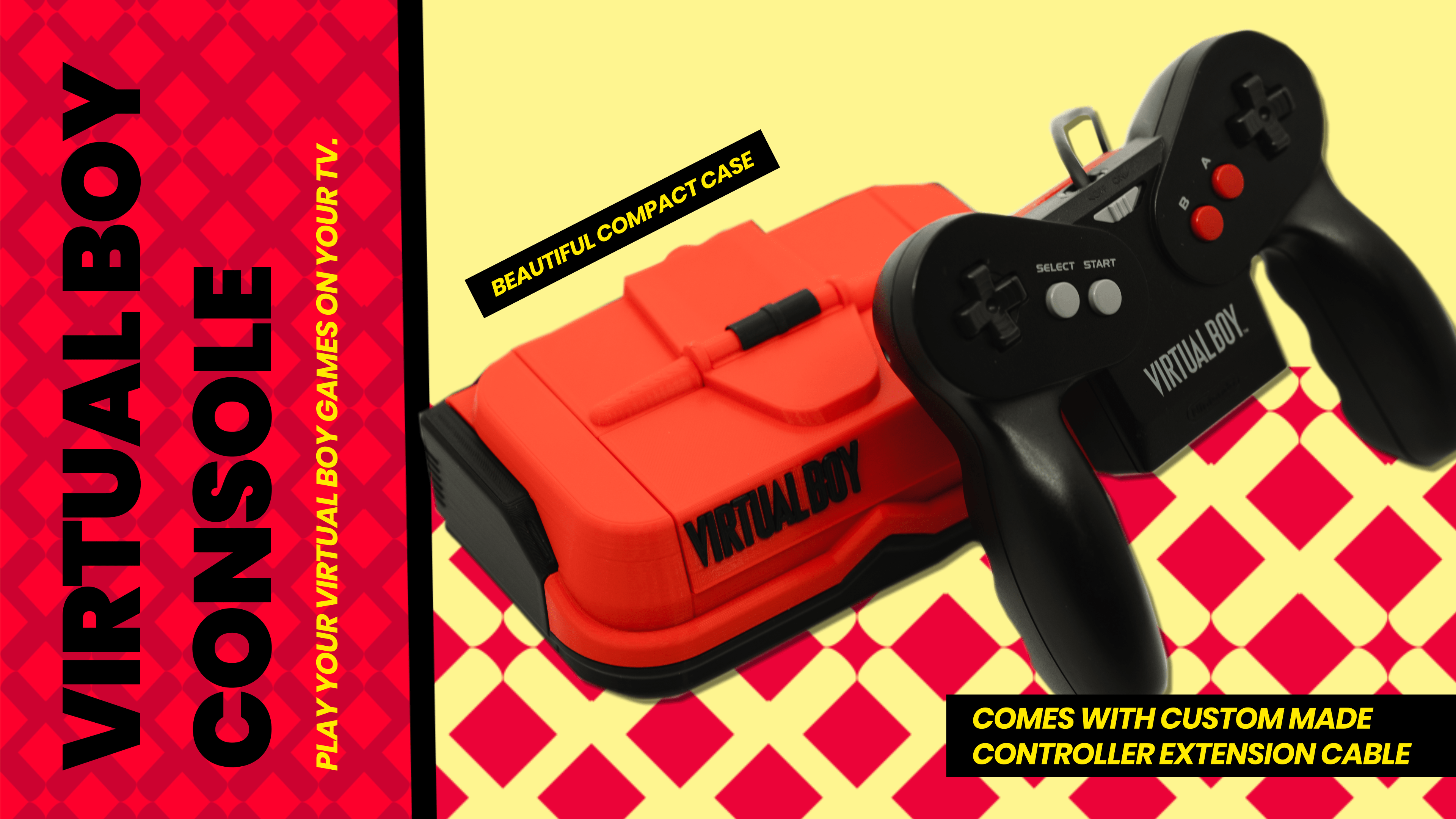
Gamers the nation over weep for the severity of this revisionist
injustice done this day in the name of the Virtual Boy
I have some immediate questions, but based on some of what’s been listed, I already have some unfortunate answers. Checking out Gamestop’s website only revealed four different locations that carry the retro product that I will have access to within 100 miles of my location, not a promising sign to put it lightly. And while the potential selection sounds great *if* it was across the board, this early rollout, if we are assuming there ever will be a greater expansion of stores that will carry the older product, which stores are going to include, if any will, the majority of the old games from every system? Browsing some more common titles and being familiar with their prices, used Pokemon titles are going for more than when they came out new. Which, again, doesn’t surprise me an iota, but given the profit margin Gamestop will no undoubtedly be aiming for, how many people are going to casually drop $50 bucks on a game, especially when one considers the possible cheaper digital version. And what of the trade in prices?
Gamestop customer: I brought a copy of Gale of Darkness to trade in! I heard it goes for like 800 bucks these days!
Gamestop employee: We can give you 8 dollars in store credit for this.
I like the idea in theory, but the execution of this has to clear such a high bar of financial irrationality for it to end up being an appealing offer my nose started bleeding just thinking about it In any case, it looks as if Gamestop is starting a rollout on the strategy already, so if you’re interested, be sure to cross your fingers that you’re near a bigger city to see if there will be any reasonable chance a store around you will be carrying some retro fare, but get ready to pony up for some old school pleasures.
~Pashford
Filed under News Nonsense
30 Seconds of Fun
I’ve been talking about nostalgia recently, and it’s easy to understand why. When your hobby finally reaches more than 50+ years of relevant history, there is a lot to look back at all of the stunning quality involved with a respectful fondness.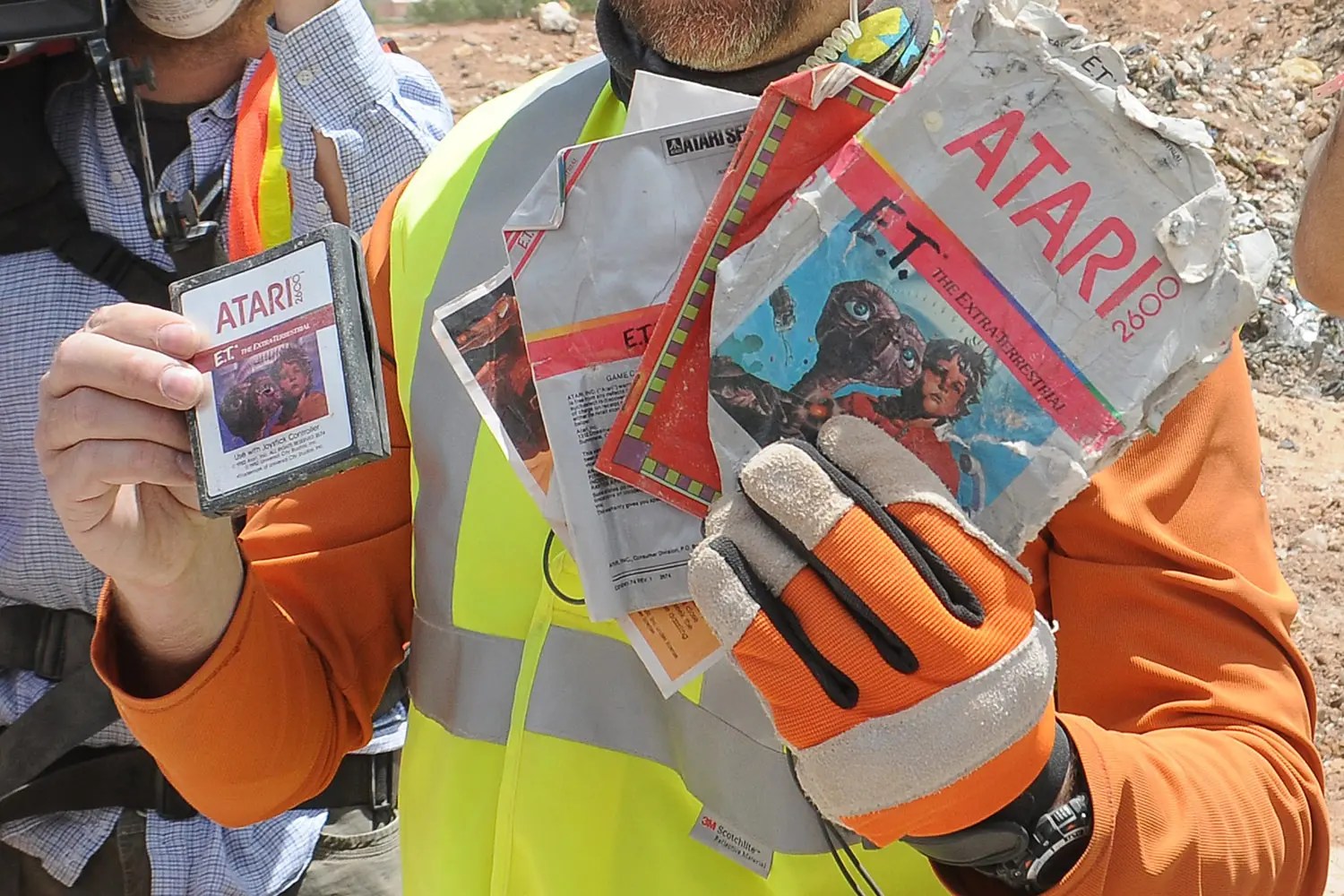
And sometimes not
With that in mind, once a year, I usually get a hankering to go back and play some old, old…old old school video games, and the hankering to play Yars’ Revenge hath returned. I decided to download Atari Flashback Classics Vol.1 to quell the desire, but also because I kind of needed something a bit short and sweet due to time constraints to discuss, and several decade old video games fit the bill.
Sic Parvis Magna
The classics collection series has been around in some form or another for awhile now, seeing both physical and digital releases over many years. They also had a run of plug-and-play related mini consoles that stored the dozens of games involved with any single iteration just to give it that real old school feel, Atari 2600 controllers included and all. This was well before Nintendo wanted in on the slice of the mini console retro pie with the release of the NES and SNES mini respectively. My point: in both their original forms and their re-released iterations, all of these games have been around for a hot minute.
Oozing forth from the halcyon era of the primordial soup
So one has a lot of games to choose from, even if many of them are extraordinarily simplistic and straight forward, and I cannot heavily emphasize enough of just how basic the games we are dealing with are. With Pong having been released all the way back in 72′ and working from there, to say these games are antiquated is an understatement. The severe technological limitations of the time demanded that the experiences were ridiculously compact, so often times a game would involve sometimes only a single screen encompassing the totality of all gameplay involved. 
Which did save a lot of time on gathering screenshots, mind you
You have to have a sense of humor about it, cause the whole thing is fucking silly when you really think about it for longer than two seconds. Don’t get me wrong: I do genuinely appreciate the gameplay involved with these classics, and the history that they represent, but you take a step back for a second and realize you’re dictating on a bunch of blocks on a screen with a high pitched buzzing sound from time to time and quantifying the creative endeavor or semantics of the game design therein. This write up will probably take more of your time than the average amount you’d spend playing any one of these games, in all of their adorable succinctness.

Behold! Basically all of the gameplay of Black Widow in a single pic!
Much to that point, there is a relevant quote I’m re-appropriating from a game designer named Jaime Griesemer, who worked on Halo 1 and 2 for Bungie back in the day. He famously described the process of designing a game as trying to nail that “30 seconds of fun”, massively paraphrase of course, going on to describe an average encounter in the Halo games he worked on. He would go on to point out that you can have great graphics and a cool story, but if you don’t nail that 30 seconds, you don’t have a game. (apologies for the lack of linked source; it happened, trust me.) Based on the caliber of design for both Halo titles in question, I would most certainly be inclined to agree. Retrofitting and applying that quotation within consideration to these old school Atari titles, the games represent such a distilled sense of concentrated gaming goodness, coupled with the limitations of the time, and you really are seeing that quote live up to it’s essence in real time, as any of these games really are that 30 seconds of fun and nothing else.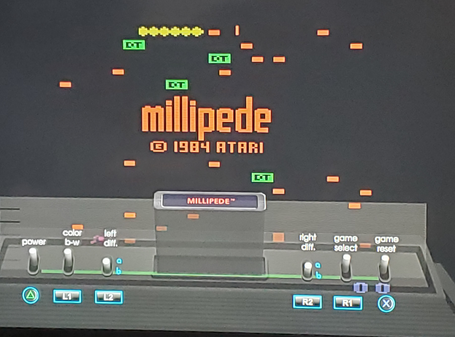
The replaybility on Millipede really has legs
And that’s perfectly alright, mind you, as these games had no frame of reference to work with, as their mission statement was to become the frame of reference for future generations to be inspired by. The onus back then was on giants like Atari to create the context for what would become the groundwork for the very foundation of gaming itself. Accomplishing that by spending time developing a title in a couple of months with almost no staff, a couple kilobytes of memory, and 30 seconds of fun to play around with, and you are left somewhere between shock and awe as you laugh at the absurdity of this very notion having spawned a multi-billion dollar industry that helped to make gamers of us all.
Yars’ Revenge: a real work of art
As is the case with a lot of my writing, I always have a billion ideas at the ready and only about 10 minutes to to do anything with them all. I’ll leave you with the reminder that Yars’ Revenge is awesome, and that in a stroke of ridiculous absurdity, a follow up sequel more than 40 years later (!) called Yars Rising, which is taking the form of a Metroidvania, is coming out for the Switch in a mere 23 days. And how!
~Pashford
Filed under Uncategorized
Cloudy Memories
When discussing the past, one must make an effort to remember the good , cope with the bad, and deal presently with cranial ghost pains from some of the worst.

That DVD player really tied the console together, did it not?
Like most systems, the PS2 was just going through the motions, restricted by financial pressures, strained by timely expectations.Through the thick and thin of sweet features and a lack luster launch line up, Sony’s little black box picked up unstoppable momentum, and never lost it. As is the case with most systems, it took less than a year for some truly massive experiences to come out that convinced you of a confident future involving an X, a Triangle, a O, and a Square.

Not the Square mentioned in regards to the PS2’s bright future.
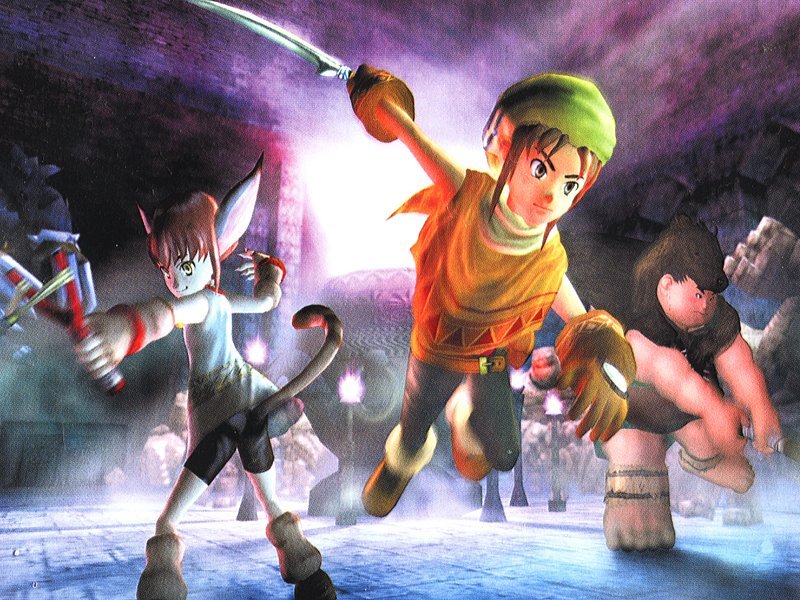
One of the games crammed into a chest of gorgeous gems was an RPG from a small developer named Level 5. Their first endeavor was the very same RPG by the name of Dark Cloud, and delivered a big dose of something, from what for all intents and purposes, was a little bit of nothing.

Little Bit of Nothing.
Dark Cloud represented a well of satiation from which PS2 players would be able to draw from in an extended drought of gaming. DC helped to create the beginning of a journey for Level 5 that would eventually put them in the spotlight as a big name in game development, and within favoritism from RPG fan’s the gaming world over. A lot of Level 5’s later titles would still use (appropriately so) most of what made up Dark Cloud’s charm. This involved a strange fusion of fantasy elements, without using cliché as a serious crutch, and more so as an extension of silly slapstick to lighten the tone. What helped further, is most of what was familiar on tap helped to remind me of what I was enjoying at the time, and many of theses same attributes derived directly from gaming.

Pictured: A non contributing gaming source of influence for Dark Cloud
Dark Cloud is more hybrid than RPG, with elements of dungeon crawlers, god games, and even rhythm based combat to speak of. The influences borrowed previously mentioned involves some heavy hitters like Ocarina of Time, Final Fantasy 9, and Diablo 2. The game shares elements with other games gone by like Populace, in regards to helping shape your world how you see fit, and even titles like Super Mario RPG, who would reward you properly in fights if you were rhythmically inclined. Dark Cloud of course put it’s own spin on many of these aspects, and while not first in doing so, helped to fabricate this odd sense of originality in the execution.

Sure, Jason was beating the hell out of moving skeletons long before video games own’ Odyssey took place, but was he bad ass enough to make entire arsenals of their remains when he was done? Didn’t think so.
I’ve been an unabashed Zelda fan since almost the very beginning of my humble gaming roots, and this has always benefited me, Dark Cloud not with standing. I speak of my personal acquisition of the game, and the odd cause and effect which made this possible. Being thirteen years of age doesn’t offer a whole lot in the ways of finance, so your choices are usually very limited to special events like birthdays. Due to some misguided Sony executive, or perhaps as an internal appeal by Level 5, of putting a character who was reminiscent of Link on the cover of Dark Cloud, they inadvertently saved my summer in 2002.
I mentioned recently in an older post that anyone who needs the box art to make the decision to buy the game, needs a certain box art. This held true then as it does now, as most people outside of gaming, live safely outside of the walls of gaming delusions, and deeply in their own. With this in mind, I’m sure my parents went on with what I will now speculate as the task of present giving by the means of grand rampancy.

An artists rendition of what my mother could have looked like while deciding what to get me for my birthday.
Deciding they had their finger on the pulse of gaming, and being expertly topical in the ways of Ms Pac Man, the choice was obvious. They knew the inner workings of my young child mind, and what strange fetishes had helped build my current mental comforts. Going the bold distance, all the way to the Wal*Mart within the borders of our town, they marched effortlessly into history. They utilized their confidently researched decision, and did so with eloquence. Arriving at their pre-ordained destination, they had reached the climax of their efforts, and were physically holding a copy of Dark Cloud. What they knew they were looking at without question, was clearly a Zelda game for the PS2, the one I had so coveted. The one that would land them into the annals of parental insanity, and represent what was well past the moment that this all stopped making sense sentences ago.

Seen here: David Bryne’s advice for enjoyable gaming
Whatever insanity drove them and me to the warm embrace of DC, I’m thankful for it. Starting up the game, and feeling as comfy with Norune village as I did in Kokiri Forest was something of a calming thrill. Struggling and clawing my way through the endless hallways of the Divine Beast Cavern, I had this sneaking familiarity, one that mirrored the innumerable hours of enjoyment that Diablo 2 had beset upon me. After barely escaping the clutches of death, curse words in tow, I laughed with weighted psychosis as I began to shape my recently destroyed town, in my own image, in all ways I saw fit.
It was all very innocent.

Very Innocent.
I say all of this in a loving sense of memory, but armed with a renewed feeling of infatuation. I had recently started playing Dark Cloud after a decade hiatus of not touching the title. A decade mind you. Leaving behind the massive sense of age with the realization, my second thought involves my time away from this ever enlightening PS2 game. One of the first I felt no real pressures to replay, no sense of having to revisit often. The game was intensely satisfying the first time around, and an ability not well matched by many piers in this arena. After all this time, and all of this quality, the stature remains. My memories wisely placed within the confines of it’s fantastical walls, my admiration a reward for the game’s generous entertainment.
Cloudy Memories
I come full circle, enjoying the good weather that has brought back a Dark Cloud.
Filed under Uncategorized
 Active Time Event