
My last *major* writing endeavor involved a more somberly self-reflective look at myself, gaming, and how the two help to actualize each other.
And I didn’t even make one lewd joke while excitedly doing so
I guess it was good fortune that I was feeling so exhausted when writing the past couple of days, as it gave me the ability to deliver an article when I thought I couldn’t at all, and prove to myself that the writing doesn’t always need a quick 1,2 punchline to justify itself. I realize my articles are never truly exhaustive in what they cover, as I feel they represent more of a creature comfort companion compendium, representing more the idea of the game and the experience itself, nearly going full gonzo in the process.
Though one should be weary when going full gonzo
With that in mind, and in a lucky coincidence of cosmic forces coalescing into a chaotic cacophony of complimentary collaboration , I follow my write up of a Zelda game coming out, with a Zelda game I slept on in the most bizarre happen stance, and one that happens to be a spin-off of Crypt of the Necrodancer: Cadence of Hyrule (CoH), in all of it’s crazy Zelda glory.
I have previously joked about what terrible research I had done involving the title, and I sure wasn’t kidding, or at least, the sentiment started out as a joke, but the premise for the laughs ended up being as real as can be. I’m not one to usually harbor expectations, though in the world of gaming, I usually have a pretty good beat on things, so seeing a project from a far, I can usually surmise or otherwise stipulate what likely awaits for me, even before diving into the experience head first.
That’s where Cadence of Hyrule delightfully blew my assumed expectations straight out of the Hylian water. Here I had thought perhaps this was going to be some cheap skin swap, with most of the original Necrodancer being largely intact, with just a fresh coat of Zelda paint slathered all over the experience…but by the three goddesses, how wrong I was. While the core elements of Necrodancer are intact (mostly), the entire experience is utterly enhanced by it’s fusion with the Zelda pedigree, and the entire game benefits tremendously as a result. I think, as follow up to the original, Cadence of Hyrule is perhaps one of the biggest embodiment’s of quality of life features I’ve seen in a series in a long time.
As mentioned, most of what made Necrodancer tick is still present, but the concentration on infusing the Zelda games is front and center in the best way possible. Having said that, as much as I am a fan of Zelda games, the titles aren’t know for their overly complex narratives, especially the 2d adventures, and CoH isn’t any different. A flimsy premise to get the main character from the Necrodancer series to Hyrule, and a big bad trying to take over, this time in the most musically themed way possible. The whole hing is a bit silly, but I’m not sure there is a straight faced way to lay down the plot work with anything less than absurdist execution.
CoH takes a lot of overall cues from Link to the Past, though the visuals are more reminiscent of Minish Cap. Though, the game overall cherry picks a bunch of different and elements from various Zelda titles, so just about any generation of Zelda player will likely feel very cozy. While the randomized nature of the maps ala Necrodancer is still intact (save for plot relevant geopgraphic staples), the game still feels unabashedly Zelda like in it’s physical form. Both times I played through the demo felt very unique, without feeling cheap or vacant either run. A good sign when a demo creates an immediate urgency for prompting replayability.
To that point, there are still mini hollows to discover in CoH, much like with any Zelda title that has bomb destroyable walls or hidden staircases covered by bushes. There remains an overworld, alongside a dedicated dungeon, so one isn’t just trudging through floor after floor of similar looking dungeons over and over again like the original Necrodancer, which really adds to the variety of exploration the game has to offer, which is exactly what you want to hear in reference to any Zelda experience.
Just like most other Zelda titles, you do have a slew of equipment in which you can arm yourself to better fight the hordes of Hyrule. I know Necrodancer had loads in terms of items to choose from, but with the more randomized nature of the dungeon layout, it always felt too few and far between. CoH is a far more localized experience thanks to the overworld, and they wisely put a save and continue (plus warp!) system in place so that inspite of the games difficulty (in keeping the spirit of Necrodancer alive), you can jump right back into the action with little progress lost. Though you lose some consumables upon death, you keep the overwhelming majority of the gear and upgrades you’ve acquired. Between the time saving checkpoint system and a dedicated inventory that sticks with you between lives, these are some of the big QoL changes I was discussing in reference to why this game was such a breath of fresh air comparatively speaking to it’s OG counter part.
CoH makes a lot of little leaps and bounds in making the entire package feel more robust. Even small/not so small elements, like the ability to block using your shield, or the more readily available health is key in making the whole game feel way more polished. Other moments, like the game having more verticality to play with in terms of level design, a map you can reference, no strict time limit like the original to contend with, dedicated save files to reference, what felt as if a more robust, built out boss fight…Cadence of Hyrule has so many ridiculous improvements over Necrodancer, it honestly makes the the original game feel like a beta in comparison.
I’m curious as to how much of this progression in game design was a natural one, and how much the devs had to collaborate with Nintendo to make sure it got the seal of approval, whatever the case may be, Cadence of Hyrule doesn’t even feel like a derivative title at all, and feels like it belongs right next to any mainline Zelda title that I’ve had the privilege to enjoy, and that’s coming from someone who had mixed feelings about the original in it’s entirety…and I’ve only just played the demo a couple of times!
Needless to say, I’m pumped to finally scrounge up the money to buy the full title as soon as I can. While I admit to having a heavy Zelda bias, there have been examples in the past of non-Nintendo backed spin offs, with varying degrees of concern in terms of relative quality to said entry. Also, as previously stated, just the fact they didn’t do a lazy palette swap was a relief enough, but they really went up and beyond to craft a love letter to the series in an immaculate fashion. With a banging soundtrack and classic gameplay to boot, I’m kicking myself for missing out on Cadence of Hyrule when it first launched. Bring on more of that radical Hyrule Rhythm, pronto.
~Pashford
Tag Archives: music
Radical Hyrule Rhythm
Filed under Uncategorized
Existential Elegy
I ended one of my last posts on a somewhat dubious note, as by the end of my experience spent with the bulk of the content involving Crypt of the Necrodancer (over a hundred hours mind you), I still wasn’t even sure if I ended up being deeply satisfied with the entire affair when all was said and done.
I did however posit the notion that Necrodancer was a solid effort, carrying the torch of those that had lit the fire that came before it, but I was still stuck in this weird purgatory of emotions involving the entire title. It’s worth mentioning that one can recognize what one may consider an objective “goodness” in relation to quality about the piece, while overall possessing a personal subjectivity that differs in terms of tonality and or preference when regarding it at large. One random but notable example of this comes in the form of Minecraft, a game which I can appreciate for its significant impact to both gaming and the culture at large, but will always remain a game I will be touch and go with for likely the remainder of it’s existence.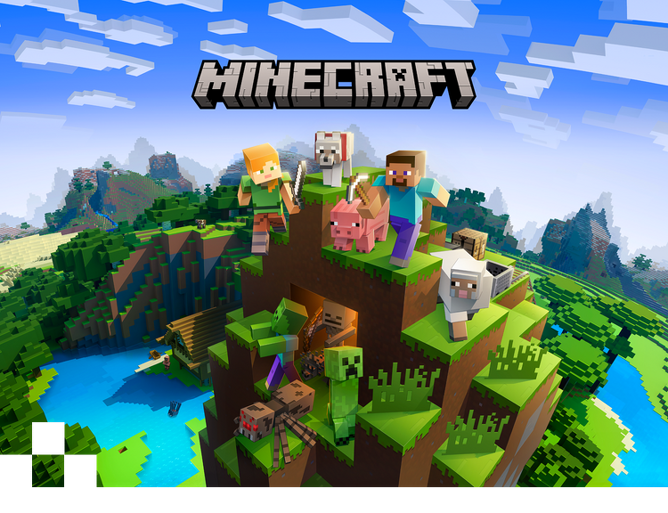
Though some of you may understand where I may be speaking from in this regard, a not too small minority share of you may yet question either the sanity or wisdom of an individual who would invest over a hundred hours into a single game and still be on the fence about whether or not they enjoyed it, and to you I would say fair enough. I do think people should be a bit more thoughtful and less dogmatic about their media consumption, gaming obviously not withstanding a lesser scrutiny. Too often, people expect no less than an industry defining experience or one of the best games of all time to greet them when they boot up a new title, with anything less not being worthy of their time.
In some regard, I understand the defensiveness and or impatience when a game which one has waited so long for, ends up being less than. If we consider what very little precious time we all have to spare, wasting it on what we might consider an inferior product does feel like a huge slap in the face. For that very reason, I do not know if in good conscious I could consider recommending Necrodancer to anyone outside of the most stubborn hardcore gamers for it’s ridiculous difficulty curve. I would most certainly laugh at anyone who told me to stick with an experience for at least a hundred hours until it got good, and all of the farce that is implied there after.
It reminds me of when I use to do paid reviews, and ended up giving Super Meat Boy a 9/10, which for anyone who knows me would likely be shocked I would rate the title with anything less than the highest marks. And while I do love the game so, I really did feel as if Super Meat Boy had a glaring accessibility issue, and that no gamer with any level of impatience, anger issues, or was generally difficulty adverse would want anything to do with the title, and that is no small number of people to consider.
Which makes Super Meat Boy stand out as the inverse of Minecraft in my prior example, as I think the objective “goodness” in relation to quality of the title is superseded by my own subjective sense of preferential treatment, as the title might represent what I believe to be one of the most engaging indie titles of all time, though I can see why that much wouldn’t be true for so many. Meat Boy also helps to underline another relativity, and that is the inherent difficulty there in. Having grown up in the 8-bit era and when the arcade scene was alive and well, I spent many of my formative years cutting my teeth on some of the harder experiences gaming has ever seen, so I tend to enjoy the challenge of it all, which does end up clouding the idea of what enjoyment is for me exactly, which is where my sense of curiosity comes in in terms of where Necrodancer stands when all is said and done.
I was actually going to spend the majority of this post discussing my ability to finally pull the trigger on playing Cadence of Hyrule after such a ridiculous delay, but now realize there was enough of an incomplete thought involving my unresolved feelings towards Necrodancer to discuss it at some length. To that point, I’ve been imbuing more philosophy in my writing about gaming, to hopefully increase the value of the discussion in general, to prompt internal dialogues about our relations to the media we consume, and to promote the sanctity of the self-reflection process by and large as a key component of personal growth. With all of that said, I felt reassured that my mind was in a healthy place of consideration when not having a final, conclusive judgement on reducing Necrodancer down to a singular point of qualitative reference, cause ultimately, it was not ever about whether or not Necrodancer was all the way good or bad, or that I was enjoying or not enjoying the experience decisively at any given moment…it was the sheer notion that we both were existing through each other, as a signification of the very essence of proof of both of our existences. I had this thought after reading this excerpt from “Being and Nothingness” by Sartre:
“But it is also possible (and this is the case with my companion), that by means of the body and by compliance to the body, the for-itself seeks to recover the totality of the non-conscious-that is, the whole universe as the ensemble of material things. In this case the desired synthesis of the in-itself with the for-itself will be the quasi-pantheistic synthesis of the totality of the in-itself with the for-itself which recovers it. Here the body is the instrument of the synthesis; it loses itself in fatigue, for example, in order that this in-itself may exist to the fullest. And since it is the body which the for-itself exists as its own, this passion of the body coincides for the for-itself with the project of “making the in-itself exist”. The ensemble of this attitude-which is that of one of a kind of mission: he is going on this expedition because the mountain which he is going to climb and the forests which he is going to cross exist; his mission is to be the one by whom their meaning will be made manifest. Therefore he attempts to be the one who founds them in their very existence.”
I think there remains a profound value in the wisdom Sartre puts forth when extrapolating on the very essence of existence, in proposing this idea of the process of transformation first being, and then doing becoming the essence of the entity, defining the essentially that creates core values of the fibers of being that end up making reality the rich tapestry of existence as it both becomes and then transcends it’s own being in the process. In essence, Necrodancer and I went through the process of becoming, which ended up being the most relevant qualitative value of our existences realized.
~Pashford
Filed under Uncategorized
 Active Time Event